


Start date – Monday 3 August 2026
HEAD, SHOULDERS, KNEES & … TUNES
This month we’re celebrating Body Parts!
Your song must feature, mention, or somehow relate to a part of the human body — from heads, eyes, ears, lips, hearts, hands and hips, all the way down to knees, legs, feet and toes.
The connection can be obvious or a bit of a stretch, but as always, you’ll need to explain why.
A heartbreaker? A song about eyes? A toe-tapping favourite? Something that’s been stuck in your head for years?
It all counts!
So get your thinking caps on and bring a tune that’s guaranteed to get under our skin.
Sue
Alessia Cara – Scars To Your Beautiful
I hope that this song suits the theme. I found it by chance and for me it sets the tone for loving your body no matter what the others may see.I am posting a bit early.
I hope that this song suits the theme. I found it by chance and for me it sets the tone for loving your body no matter what the others may see.
Arno
Under Your Scars – Godsmack
Errol
Fiona Harrison – Hands Knees and Boomps a Daisy
Well.
From the sublime of the past two tracks by Sue and Arno, to this. There is simply no accounting for taste. That said, some of our senior members may well remember this song. Richard and I have fond memories of it in dance halls from Whitehall to Cairo, where Richard was always quite the spectacle while boomping his way through the ladies on the dancefloor.
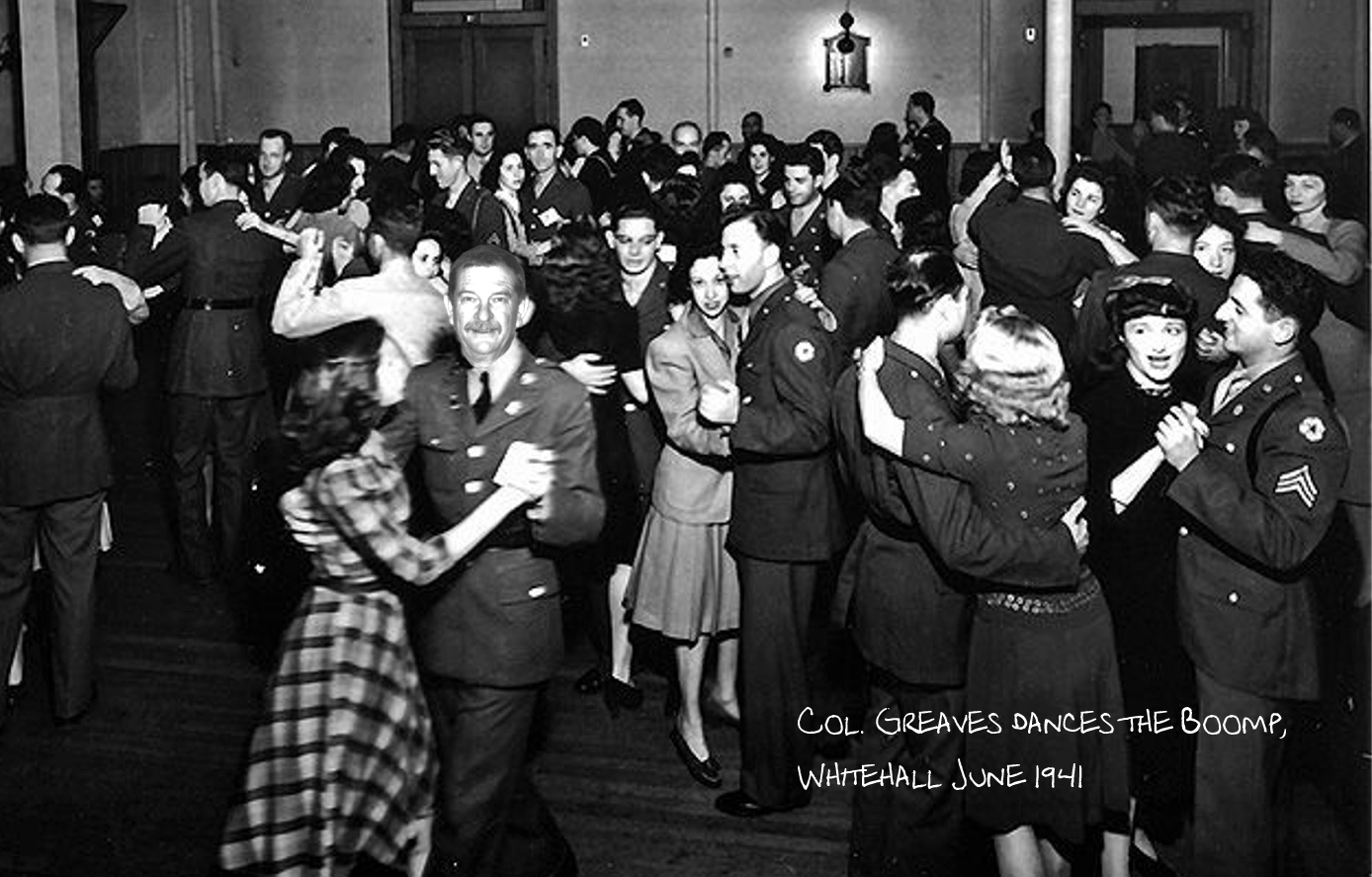
Written by Annette Mills, in 1936, “Hands, Knees and Boomps-a-Daisy” was a massively popular novelty song and interactive partner dance in British music halls, clubs, and air-raid shelters during the late 1930s and 1940s. The cheeky dance involved clapping, slapping knees, and playfully bumping hips (“boomp”) with a partner. In public, nogal.
Enjoy.
Liezel
Glass Animals – Toes
My body part tonight is toes… there aren’t many songs about them, and yet I find them damn important – especially when you hit one on the corner edge of the bed! .. and balance … and the ability to dance …
The song is inspired by H.G. Wells’ classic novel The Island of Dr. Moreau. The story follows a man who becomes stranded on a remote tropical island, where a scientist has created terrifying human-animal hybrids. Throughout the book these creatures desperately cling to what’s left of their humanity, even though they’re no longer fully human.
That’s why the lyrics say things like ‘Five fingers, two black hooves’ and ‘Got toes and I can smile.’ It’s one of these creatures insisting, ‘I’m still a man,’ despite having been turned into something else.
Glass Animals’ singer, Dave Bayley, has said the whole sound of the song was meant to feel like The Island of Dr. Moreau mixed with another book, Charles Marlow ‘s Heart of Darkness which they reference because of the way the atmosphere is – venturing into a jungle which is humid, mysterious, tropical and just a little bit unsettling and where morality starts to unravel.
Deborah
Paul Anka – Put Your Head On My Shoulder
Pual Anka was a massive teenage heartthrob and pop idol, and wrote and recorded “Put Your Head on My Shoulder” in August 1958 when he was just 18.
He is now 85 years old, actively writing, and still performing live. He recently released his studio album, Inspirations of Life and Love.
I adore the inserts of the swooning girls in this video.
Paul L
Elton John – Bitter Fingers
Story behind Elton John bitter fingers:
“Bitter Fingers” is an autobiographical song that details Elton John and Bernie Taupin’s early struggles as frustrated, underpaid staff songwriters. Released on the 1975 landmark album Captain Fantastic and the Brown Dirt Cowboy, the track captures a specific pre-fame window in the late 1960s when the duo was forced to churn out generic pop music for other artists.🎹 The Grind at Dick James MusicBefore Elton John became a global superstar, he and lyricist Bernie Taupin were hired as staff writers for publisher Dick James Music (DJM).The Mandate: Management forced them to write commercial, paint-by-numbers pop songs.The Frustration: They were tasked with catering to cabaret acts, club singers, and standard radio formats of the late ’60s.The Rebellion: In the song, Bernie expresses his deep hatred for these formulaic arrangements, writing the famous line: “I’m sick of tra-la-las and la-de-das.”✍️ The Meaning Behind the hTitleThe term “Bitter Fingers” refers directly to the physical and emotional exhaustion of the duo.Elton’s Toll: It represents Elton knocking out chords on the piano for melodies he didn’t care about.Bernie’s Toll: It represents Bernie writing lyrics with a sense of bitterness toward a rigid music industry.The “Swinging Stars”: The lyric “Bitter fingers never swung on swinging stars” serves as a critique of how the corporate music machine operated, contrasting their grueling labor with the easy glamour of established pop stars.🚀 The Turning PointThe song captures the exact moment right before their breakthrough. While working at DJM, a promotion man named Steve Brown told Elton and Bernie that the generic songs they were churning out were awful. He explicitly advised them to stop trying to please the market and start writing music they actually believed in.This pivotal advice led them to break away from the “tra-la-las,” resulting in early, authentic tracks like “Lady Samantha” and Elton’s 1969 debut album, Empty Sky.💿 Album Context”Bitter Fingers” sits perfectly within Captain Fantastic and the Brown Dirt Cowboy, which is a conceptual, chronological autobiography of Elton (Captain Fantastic) and Bernie (the Brown Dirt Cowboy). While it remains a fan-favorite album track rather than a major radio hit, it stands as a raw, honest look at the grueling reality behind the birth of one of music’s greatest songwriting partnerships.
Madporra
YES – Owner of a Lonely Heart
“Owner of a Lonely Heart” by the rock band Yes is about choosing emotional self-reliance and taking risks in love. The famous hook argues that being lonely is safer and “much better than a broken heart,” yet the lyrics ultimately urge people to use their free will, face past hurts, and try again.
It was Yes’s only Billboard number-one hit.
BUT!!! Here’s the interesting part ….
Journey to the Top 100 …….
[1979] Trevor Rabin writes a solo demo tape [1981] Yes temporarily breaks up [1982] Former members join Rabin to create a new band named “Cinema” [1983] Jon Anderson joins; group reclaims the name “Yes” [Jan 1984] “Owner of a Lonely Heart” hits #1 on the US Billboard chartsIt Started as a Rejected Solo Demo – South African musician Trevor Rabin originally wrote the song’s skeleton in 1979 for his own solo career. Legendary music executive Clive Davis famously rejected the demo, calling it “too strange” and predicting it would never be a hit.
Yes broke up in 1981, core members Chris Squire and Alan White teamed up with Rabin to form a new band called Cinema. When original Yes vocalist Jon Anderson joined late in the recording process, they changed the name back to Yes, converting a Cinema project into the eleventh Yes studio album, 90125. Rabin brought a distinct, global sound that led to their biggest American chart success.
Richard
Doo Wah Diddy Manfred Mann
Life was so uncomplicated growing up in Johannesburg in the 50’s and 60’s. Take the case of Manfred Lubowitz – a product of Meyerton college and Highlands North high school. He didn’t really excel academically, his teacher writing in his report – Manfred could do better if he did not waste time in class, he must concentrate on his studies.
Nevertheless he was admitted to Wits where he studied classical music – he was however committed to his love of jazz.
In 1961, seeking artistic freedom he moved to the UK, changed his name and formed a rock band.
This song released in 1964 hit the no 1 spot in the USA. Life was so uncomplicated thenLife was so uncomplicated growing up in Johannesburg in the 50’s and 60’s. Take the case of Manfred Lubowitz – a product of Meyerton college and Highlands North high school. He didn’t really excel academically, his teacher writing in his report – Manfred could do better if he did not waste time in class, he must concentrate on his studies.
Nevertheless he was admitted to Wits where he studied classical music – he was however committed to his love of jazz.
In 1961, seeking artistic freedom he moved to the UK, changed his name and formed a rock band.
This song released in 1964 hit the no 1 spot in the USA.
Life was so uncomplicated then.
Wilfred
A Fistful of Dollars • Main Theme • Ennio Morricone
Fistful of Dollars gets in on the title, but wait, there is more.
This was a low-budget Italian Western, so Ennio Morricone didn’t try to imitate the huge orchestral sound of Hollywood. Instead he built this extraordinary score out of whistles, whip cracks, bells, chanting, percussion and, most bizarrely, an electric guitar in a film set in the 1800s.
Historically ridiculous. Musically brilliant.
And here’s the wonderful full circle: the Italians were so worried audiences wouldn’t take an Italian Western seriously that Morricone was credited as Dan Savio, while Sergio Leone became Bob Robertson. Pretending to be Americans.
A few years later, Hollywood was copying them.
So, from a fake American Western that reinvented the real American Western.
Chrisna
Alanis Morissette – Hand In My Pocket
Alanis Morissette’s song “Hand in My Pocket” is an anthem about embracing life’s contradictions and uncertainties. Through a list of contrasting personal states—like being broke yet happy or sane yet overwhelmed—she highlights that human experience is layered and you do not need to have everything figured out to be okay.